
By Dr. T. Babu Rao
Founder, Provia Global · Executive Director, United Gospel Mission
Churches often speak about sustainability as though it were mainly a funding question. Funding matters, but I think the deeper issue is capacity: does the local church have the leadership, stewardship, relationships, skills, and economic resilience to carry ministry responsibility over time?
This is where local enterprise can sometimes play an important role. A small business, vocational initiative, cooperative, or income-generating activity can strengthen households, create employment, develop skills, and in some settings provide additional resources for ministry.
But local enterprise is not a universal solution, and churches should not be pushed into business simply because donor funding feels uncertain. Enterprise creates its own risks and responsibilities. It works best when it grows from real local opportunity, competent leadership, sound governance, and a clear understanding of what the church should—and should not—control.
“Local enterprise can strengthen ministry resilience, but only when it builds local capacity rather than creating a new dependency on one business, one leader, or one outside program.”
Dr. T. Babu Rao
On This Page
Explore the sections in this article
What Do We Mean by Local Enterprise?
By local enterprise, I mean economic activity that is rooted in the skills, markets, relationships, and needs of a local community. That could include an individual entrepreneur, a family business, a cooperative, a vocational initiative, a social enterprise, or an earned-income activity operated with appropriate governance.
The key word is local. The enterprise should make sense in the actual context. It should not be imported simply because a model worked somewhere else.
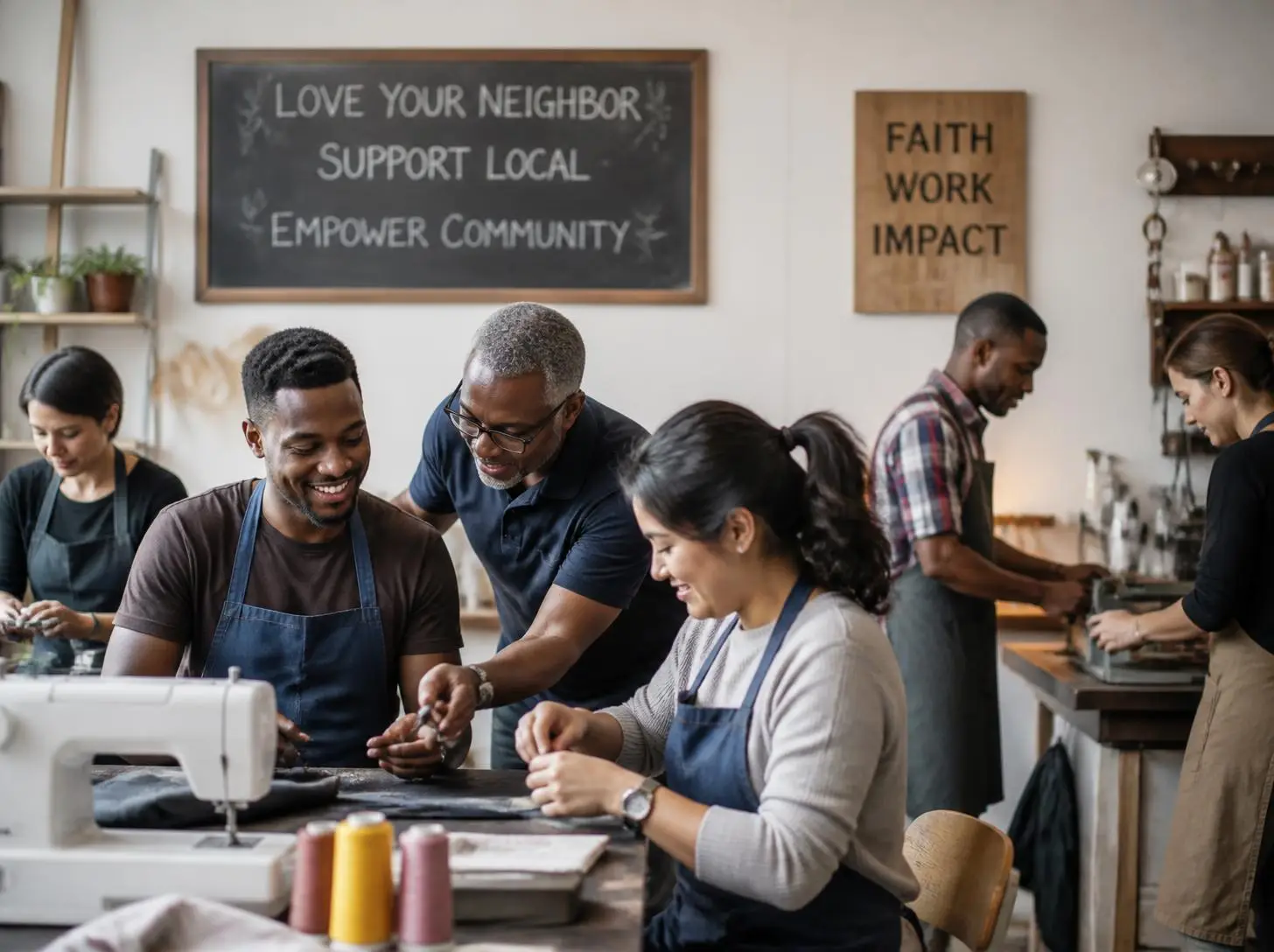
A tailoring business may fit one community. Agriculture, food processing, repair services, digital work, childcare, transport, or education may fit another. The opportunity has to be tested against demand, costs, competition, regulation, and the capacity of the people who will run it.
For churches, the goal should not be to become commercial institutions. The goal is to understand where local enterprise may help people become more economically resilient while remaining connected to discipleship, stewardship, and service.
1. Sustainable Churches Need More Than External Funding
Outside support can be deeply valuable. Mission partnerships, grants, and donor relationships have helped churches train leaders, respond to crises, launch programs, and reach communities that otherwise might have received little support.
The concern begins when one funding stream carries so much of the ministry that a change in that relationship threatens the entire work.
A healthier approach is to build several kinds of capacity at the same time: local giving, stronger leadership, transparent governance, practical skills, reserves where possible, diversified partnerships, and—where appropriate—local enterprise.
This is consistent with the wider framework we developed in From Donor Dependency to Sustainable Mission. Sustainability is not isolation from donors. It is resilience.
2. The Bible Affirms Work and Stewardship Without Prescribing One Business Model
Scripture Focus
Acts 20:34 — Paul reminds the Ephesian elders that his own hands supplied his needs and those of his companions.
Paul’s vocational work is important because it shows that productive work and ministry can exist together. But Paul also received support from churches at other times. His practice was flexible.
That matters when we talk about local enterprise. Scripture gives us principles of work, biblical stewardship, generosity, justice, diligence, and responsibility, but it does not command every church to start a business.
Likewise, Lydia’s commercial activity in Acts 16 shows that businesspeople can play an important role in the life of the church. Proverbs includes images of trade, planning, production, and stewardship. Yet none of these passages should be turned into a formula that guarantees financial success.
The biblical question is not, “Does every ministry need an enterprise?” It is, “How do we steward the people, skills, resources, and opportunities God has placed in this community?”
3. Local Enterprise Should Begin With a Real Market Need
One of the most common mistakes in ministry-linked enterprise is beginning with enthusiasm rather than demand.
A church may have willing people and a meaningful social purpose, but a business still needs customers. A product still needs to solve a problem. Pricing still has to cover costs. Cash flow still matters.
That is why a responsible local enterprise process should include basic market validation:
- Who is the actual customer?
- What problem are they willing to pay to solve?
- What alternatives already exist?
- What will the product or service cost to deliver?
- Can the business generate enough margin to survive?
- What licenses, taxes, or regulatory requirements apply?
- What happens if demand is lower than expected?
Good intentions are not a business model. Churches and ministries should welcome experienced entrepreneurs, accountants, lawyers, and sector specialists into these conversations rather than assuming pastoral leaders can answer every commercial question.
4. The Church Should Form People Without Controlling Their Businesses
This distinction is especially important.
The local church may be well positioned to contribute spiritual formation, character assessment, relationships, accountability, and a long-term community of support. But that does not mean the church should own or control every business launched by its members.
In most cases, the entrepreneur should remain responsible for the enterprise. Mentors can advise. Pastors can disciple. Professional advisers can help with technical issues. Church leaders can set boundaries around any church-owned assets or funds.
A healthy local enterprise ecosystem therefore separates roles clearly.
“The church can help form the entrepreneur without becoming the entrepreneur.”
Dr. T. Babu Rao
This protects both sides. Entrepreneurs need room to make business decisions and carry consequences. Pastors need freedom to remain pastors rather than becoming informal bankers, investors, or managers of businesses they are not equipped to run.
5. Economic Empowerment Should Strengthen Dignity and Responsibility
One reason I am interested in local enterprise is that it can shift the conversation from repeated relief toward productive capacity.
Relief is necessary in genuine emergencies. There are moments when people need food, shelter, medical care, or direct assistance immediately. Enterprise should never be used as an excuse to withhold compassion.
But when the issue is long-term economic vulnerability, people often need more than recurring aid. They may need skills, tools, market access, mentoring, savings habits, financial literacy, or a pathway into dignified work.
Economic empowerment becomes meaningful when people gain greater ability to make decisions, support their families, contribute to their church and community, and withstand future shocks.
That is why local enterprise should be measured not only by revenue but also by whether it is building capability.
6. Local Leadership Is More Important Than Imported Programs
Programs often look sustainable while outside trainers, managers, and funders are present. The real test comes later.
Who can lead when the external team is no longer there? Who understands the local market? Who can train another person? Who can review the finances? Who can identify when the enterprise is drifting from its purpose?
Local enterprise becomes more resilient when local people carry increasing responsibility for facilitation, mentoring, decision-making, and adaptation.
This connects directly with faith-based leadership development. Economic models do not outlast weak leadership.
Outside partners can still add tremendous value through capital, technical expertise, mentoring, networks, and training. The question is whether that support is transferring capacity or merely keeping the outside organization at the center.
7. Governance Matters More When Money and Ministry Meet
When churches become involved in enterprise, even indirectly, governance becomes essential.
Questions that seem small at the beginning can become serious later. Who owns the equipment? Who controls the bank account? Is a pastor receiving personal benefit? Are church funds being used as working capital? What happens if the business loses money? Can relatives of leaders participate? Who approves loans or grants?
A credible local enterprise initiative should therefore have clear safeguards:
- separate church and business funds;
- document ownership and decision-making authority;
- disclose conflicts of interest;
- avoid guaranteeing funding simply because someone completes training;
- use qualified accounting and legal advice where required;
- make generosity voluntary rather than tying it to participation;
- keep financial reporting understandable to those responsible for oversight.
Governance does not make ministry less spiritual. It protects trust.
8. Five Signs a Church Enterprise Ecosystem Is Becoming Healthier
I would look for five broad signs:
I. Local Ownership Is Increasing
People in the community are participating in decisions, giving, mentoring, and carrying responsibility rather than waiting for outside direction.
II. Leaders Are Being Developed
Knowledge is being transferred. More than one person understands how the program, mentoring process, or enterprise support system works.
III. Enterprise Decisions Are Becoming More Disciplined
Participants are learning to keep records, understand customers, manage cash flow, price responsibly, and distinguish hope from evidence.
IV. Partnerships Are Strengthening Capacity
Donors and outside organizations are helping build skills, systems, and resilience instead of becoming the permanent operating center.
V. The Church Is Remaining a Church
Commercial activity is not crowding out worship, discipleship, pastoral care, or mission. Enterprise serves the wider calling; it does not redefine the church around business.
How Provia Global Is Approaching Local Enterprise
Provia Global is developing the Church-Based Business Accelerator for pilot use as one practical way to explore these ideas.
The model is still being developed and prepared for pilot implementation. We are not presenting established cohort outcomes. The current focus is on bringing together biblical formation, entrepreneurship education, mentoring, stewardship, local facilitation, and appropriate safeguards.
The aim is not to turn churches into business incubators in the conventional sense. It is to help churches understand how they can support responsible enterprise while drawing on business practitioners for the expertise pastors may not have.
This also connects with our wider work on Church-Led Economic Development and Church Social Enterprise.
Local Enterprise Is a Tool, Not the Mission
Local enterprise can strengthen churches and communities, but it should never become the measure of spiritual maturity or the center of the church’s identity.
The church’s calling remains worship, discipleship, fellowship, witness, service, and faithful presence. Economic initiatives can support that calling by strengthening households, creating opportunity, and reducing avoidable fragility.
The wisest approach is neither to romanticize enterprise nor to dismiss it. Test the opportunity carefully. Build the right leadership. Protect the church’s role. Invite competent business expertise. Start small enough to learn.
If local enterprise can help people become more capable, more responsible, and more resilient while keeping ministry rooted in local ownership, then it can become a meaningful part of a wider sustainable mission strategy.
Dr. T. Babu Rao is the Founder of Provia Global and Executive Director of United Gospel Mission. His work focuses on Christian leadership development, church-based training, sustainable mission, and faith-based entrepreneurship.
Related Reading: This is one story in a larger pattern of church-led economic development. See the full framework in our Church-Based Business Accelerator Guide.