By Dr. T. Babu Rao
Founder, Provia Global · Executive Director, United Gospel Mission
Economic development conversations often begin with capital, training, markets, or infrastructure. Those are important. But in many communities, another question matters just as much: who will help shape the character, relationships, and stewardship that surround economic opportunity?
This is where I believe church-led economic development deserves serious attention. The local church is not simply a convenient venue for business training. At its best, it is a community of trust, discipleship, accountability, and long-term relationship. When enterprise development is connected to those strengths, economic activity can be approached not only as a way to earn income, but as a way to serve families, create dignified work, practice integrity, and strengthen the wider community.
“Economic development becomes more sustainable when people are not only learning how to earn, but how to steward, serve, and strengthen others.”
Dr. T. Babu Rao
That does not mean every church should become a business incubator, nor does it mean pastors should become business managers. It means the church can play a constructive role in forming people, convening trusted relationships, and encouraging local responsibility while appropriate business expertise supports the enterprise itself.
What Church-Led Economic Development Means
Church-led economic development is an approach in which local churches help create an environment where livelihood, entrepreneurship, stewardship, discipleship, and community responsibility can develop together.
The emphasis is important. The church does not need to own every business, finance every entrepreneur, or control every commercial decision. Its role is better understood as forming people, identifying trustworthy leaders, encouraging responsible stewardship, connecting participants with appropriate expertise, and helping keep economic opportunity connected to Christian character and community responsibility.
For Provia Global, this idea sits close to our wider thinking about church-based business acceleration, sustainable mission, and leadership formation. The model we are developing is intended to strengthen local ownership rather than create another layer of dependency.
1. Economic Activity Needs Formation as Well as Skills
Scripture Focus
Colossians 3:23 — “Whatever you do, work at it with all your heart, as working for the Lord.”
A business can become financially viable without becoming ethically healthy. Revenue alone does not tell us whether workers are treated fairly, customers are served honestly, commitments are kept, or success is being used responsibly.
This is one reason the church can contribute something distinctive. Christian formation brings questions of character into the same conversation as opportunity: How is this person handling money? How are employees treated? Is growth producing generosity or only greater self-interest? Is the entrepreneur becoming more trustworthy as responsibility increases?
Business skills matter. So do bookkeeping, market research, pricing, customer service, access to capital, and product quality. Church-led economic development should not replace technical competence with spiritual language. It should bring the two together.
2. The Local Church Already Holds Relationships That Outside Programs Must Build
Many development programs spend considerable time establishing trust, identifying local leaders, understanding community dynamics, and creating a structure for follow-up. A healthy local church may already possess many of those relationships.
That does not make the church automatically competent to run an enterprise program. Trust must still be handled carefully, governance must be clear, and favoritism must be avoided. But the church’s long-term presence can provide continuity that short-term projects often struggle to create.
A pastor may know which families are under pressure. Church leaders may know who has demonstrated reliability over time. Members may already be serving one another through informal networks of advice, employment, purchasing, childcare, and practical help.
When that relational capital is combined with sound enterprise training, it can create a stronger environment for local economic initiative.
3. Local Ownership Matters More Than Program Ownership
One of the dangers in mission-related economic development is that a program can become successful on paper while remaining dependent on outside money, outside staff, or outside decision-making.
I believe the stronger question is: what will remain locally owned when the outside partner steps back?
That means local leaders should be involved early in defining needs, selecting appropriate approaches, setting expectations, and deciding what success should look like in their context. An imported model should never become more important than the people it is meant to serve.
“Local ownership grows when outside support builds capacity without replacing local responsibility.”
Dr. T. Babu Rao
This principle connects directly with our broader work on moving from donor dependency toward sustainable mission. External partnership can be valuable, but its healthiest purpose is to strengthen local capacity, not permanently substitute for it.
4. The Pastor Should Not Have to Become the Business Expert
A church-based model becomes unhealthy if every responsibility is pushed onto the pastor. Pastors already carry spiritual, relational, and organizational responsibilities. Expecting them to become accountants, market analysts, lenders, and business coaches is neither realistic nor necessary.
A better model is collaborative. The pastor or church leadership can help with spiritual formation, character, community trust, and accountability. Business mentors can support enterprise skills. Financial professionals can help with recordkeeping and controls. Experienced entrepreneurs can help participants think through markets, pricing, operations, and risk.
This protects both the church and the entrepreneur. It also reflects a biblical pattern in which responsibility is shared rather than concentrated in one person.
5. Stewardship and Generosity Should Be Formed, Not Forced
Scripture Focus
2 Corinthians 9:7 — “Each of you should give what you have decided in your heart to give… for God loves a cheerful giver.”
Economic development within a Christian context should include stewardship, but stewardship should not become pressure.
An entrepreneur can be encouraged to think about generosity, fair wages, responsible reinvestment, family obligations, saving, debt, and service to the community. Those habits help move the conversation beyond personal profit toward faithful use of resources.
At the same time, churches must be careful not to treat successful entrepreneurs as automatic funding sources for ministry. Generosity should be taught as discipleship, not extracted as an obligation tied to participation in a program.
This balance matters if church-led economic development is going to strengthen trust rather than create a new form of financial pressure.
How the Church-Based Business Accelerator Fits
Provia Global is developing the Church-Based Business Accelerator as one practical expression of these ideas. The aim is to bring together biblical formation, enterprise education, local facilitation, stewardship, and a pathway toward greater local economic resilience.
Because the model is still being developed and prepared for pilot use, I would rather describe its intended design than claim outcomes that have not yet been established. The central idea is straightforward: equip local leaders to facilitate a structured learning process, help participants develop viable enterprise ideas and business disciplines, and keep character, stewardship, and community responsibility visible throughout the process.
The model is intended to be adaptable. What works in one city, denomination, or economic setting may need to look different somewhere else. Context should shape implementation without changing the underlying convictions about integrity, stewardship, local ownership, and service.
A Simple Illustration
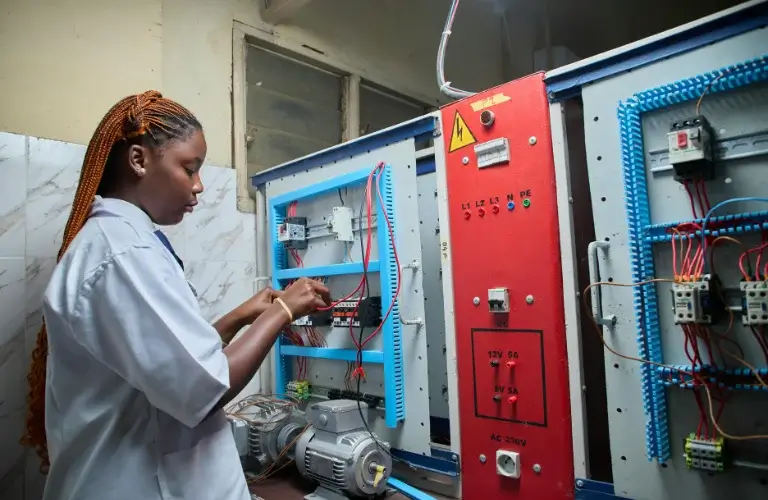
Consider a hypothetical example. A church member operates a small tailoring business and wants to grow from two workers to four. Business training may help with pricing, cash flow, customer acquisition, and production planning. The church’s contribution may be different: trusted relationships, encouragement, accountability, prayer, and a community in which character is observed over time.
If the business grows, the questions should not stop at revenue. Are workers paid fairly and on time? Is the owner keeping accurate records? Is debt being handled wisely? Is growth strengthening the family or destabilizing it? Is the entrepreneur helping someone else learn?
That is the kind of integrated picture church-led economic development is trying to encourage. The illustration is not a report of a Provia outcome; it is an example of the kind of formation-and-enterprise relationship the model is designed to support.
Why This Matters for Mission Partners
For churches, foundations, and donors considering economic-development partnerships, local ownership should be one of the first questions asked.
Funding can launch activity quickly, but long-term strength depends on what remains when that funding changes. Are local leaders able to continue the work? Are participants developing skills that remain useful beyond the project? Are local churches becoming stronger conveners and mentors, or more dependent on the outside partner?
The local church can offer continuity, but continuity should not be confused with institutional control. The strongest partnerships respect local leadership, bring appropriate technical expertise, set clear financial safeguards, and allow the model to be contextualized rather than exported unchanged.
This is also why I see economic development as one part of a wider ecosystem of church capacity building, biblical leadership, and sustainable mission rather than as a stand-alone business project.
Questions to Ask Before Starting
- What economic need or opportunity are we actually trying to address?
- What role is appropriate for the church, and what role requires outside technical expertise?
- How will participants be selected fairly and transparently?
- What safeguards will protect church funds and participant funds?
- How will business viability be evaluated without ignoring character and stewardship?
- What should remain locally owned if outside funding ends?
- How will the program avoid making the pastor the center of every decision?
- How will generosity be taught without becoming pressure?
The Practical Case for Church-Led Economic Development
The case for church-led economic development is not that churches can replace professional enterprise support. They cannot, and they should not try.
The case is that economic development becomes stronger when business competence is connected to character, trusted relationships, stewardship, local leadership, and a community that remains after a training event ends.
For Provia Global, that is the opportunity we are exploring: helping churches become stronger environments for leadership formation, enterprise learning, and locally owned mission without turning the church into a commercial institution.
You can read more about the Church-Based Business Accelerator model, our wider approach to sustainable mission, or connect with Provia Global if your church or organization is exploring similar questions.
Dr. T. Babu Rao is Founder of Provia Global and Executive Director of United Gospel Mission. His work focuses on Christian leadership development, church-based training, sustainable mission, and faith-based entrepreneurship.