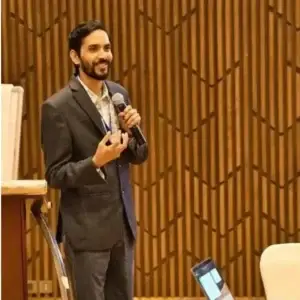
By Dr. T. Babu Rao
Founder, Provia Global · Executive Director, United Gospel Mission

In communities across urban North India, the greatest barrier to lasting transformation is rarely a lack of resources — it is a shortage of equipped, rooted leaders. Genuine faith-based leadership development begins not with strategy or skill, but with formation: the slow, intentional shaping of a person’s character, calling, and capacity by the Spirit of God.
That conviction, more than any curriculum, is what has shaped how Provia Global approaches faith-based leadership development.
Leadership as Vocation, Not Position
Scripture presents leadership not as a title to be acquired but as a vocation to be answered. Moses was formed in obscurity before he stood before Pharaoh. Paul spent years in Arabia before his public ministry flourished. Nehemiah prayed and wept before he ever picked up a trowel. The pattern is consistent: God prepares leaders from the inside out — through suffering, surrender, and sustained encounter with His Word.
This is the foundation on which Provia Global builds. Our Church-Based Business Accelerator (CBA) model is not simply an entrepreneurship programme — it is a faith-based leadership development pathway rooted in the local church. When marketplace believers and pastors are equipped together, the result is a generation of leaders who can hold a business plan in one hand and a shepherd’s heart in the other.
Three Pillars of Faith-Based Leadership Development
Our approach to faith-based leadership development rests on three integrated pillars:
- Biblical Grounding. Every leader we walk with is anchored in Scripture. We draw from the Pauline mission model — the tent-making, church-planting, disciple-making paradigm — as both inspiration and instruction. Leaders learn to read their context through a biblical lens, discerning where God is already at work.
- Relational Accountability. Drawing on the early church’s oikos (household) structure, we cultivate cohorts of leaders who journey together. Transformation rarely happens in isolation; it happens in communities of trust where leaders can be honest about their struggles and sharpen one another toward Christlikeness.
- Practical Stewardship. Faith without works is incomplete. We equip leaders with the practical tools of financial literacy, community development, and social entrepreneurship — not as ends in themselves, but as expressions of faithful stewardship of the gifts and opportunities God has entrusted to them.
Why the Local Church Remains Central
In an era when leadership development is often outsourced to conferences, consultancies, and online platforms, Provia Global makes a countercultural bet on the local church. The church is not merely a venue for training — it is the community in which leaders are tested, affirmed, corrected, and sent.
This conviction echoes a wider movement among global church networks such as the Lausanne Movement, which has long argued that leadership formation is most durable when it stays rooted in local, church-based community rather than imported programming.
Across North India’s urban centres, the local church often operates on the margins of social influence. Our CBA model is designed to change that — not by making the church more like a corporation, but by helping the church fulfil its God-given role as a catalyst for community flourishing.
When leaders are formed within the body of Christ and deployed into the marketplace, the church becomes visible, credible, and redemptively present in its neighbourhood. You can read more about how this plays out in practice in our guide to the Church-Based Business Accelerator.
Leadership is one pillar of a larger strategy. See Provia Global’s sustainable mission framework for how indigenous leadership connects to local enterprise, biblical stewardship, and church-based funding.
The Counter Argument
The strongest objection to church-based, formation-first leadership development is speed. Centralized academies and professional leadership programs can process far more candidates per year than a pastor mentoring a small cohort ever could. If the goal is producing credentialed leaders quickly, the church-based model will almost always lose that race.
That objection is fair, and it points to a real trade-off rather than a flaw to be argued away. But speed and durability are answering different questions. A leadership academy can teach someone to build a five-year plan in a weekend; it cannot, in that same weekend, teach them what to do when the plan fails and no one is watching.
Scripture’s own pattern of leadership formation — Moses in Midian, Paul in Arabia, David in the wilderness before the throne — was never efficient by that measure. It was thorough. Provia Global’s experience across CBA cohorts in North India suggests the same trade-off holds today: what the local church loses in throughput, it recovers many times over in leaders who are still standing, still faithful, and still leading a decade after the program itself is forgotten.
An Invitation
If you believe, as we do, that the most strategic investment in any community is faith-based leadership development that forms Christ-centred character, we invite you to join us. Whether through prayer, partnership, or financial support, you can help raise up a generation of leaders across North India who will carry the Gospel into homes, businesses, and communities for decades to come.
Explore the complete sustainable mission framework to see how leadership development fits into Provia Global’s broader approach to lasting, locally-owned ministry.
Provia Global is a U.S.-based 501(c)(3) nonprofit. EIN: 39-3262537. All donations are tax-deductible to the extent permitted by law.
Dr. T. Babu Rao is Founder of Provia Global and Executive Director of United Gospel Mission, with more than twenty years of experience in church-based leadership development and faith-driven entrepreneurship across North India.